First-Hand vs Second-Hand Leases in Sweden: What's the Difference?
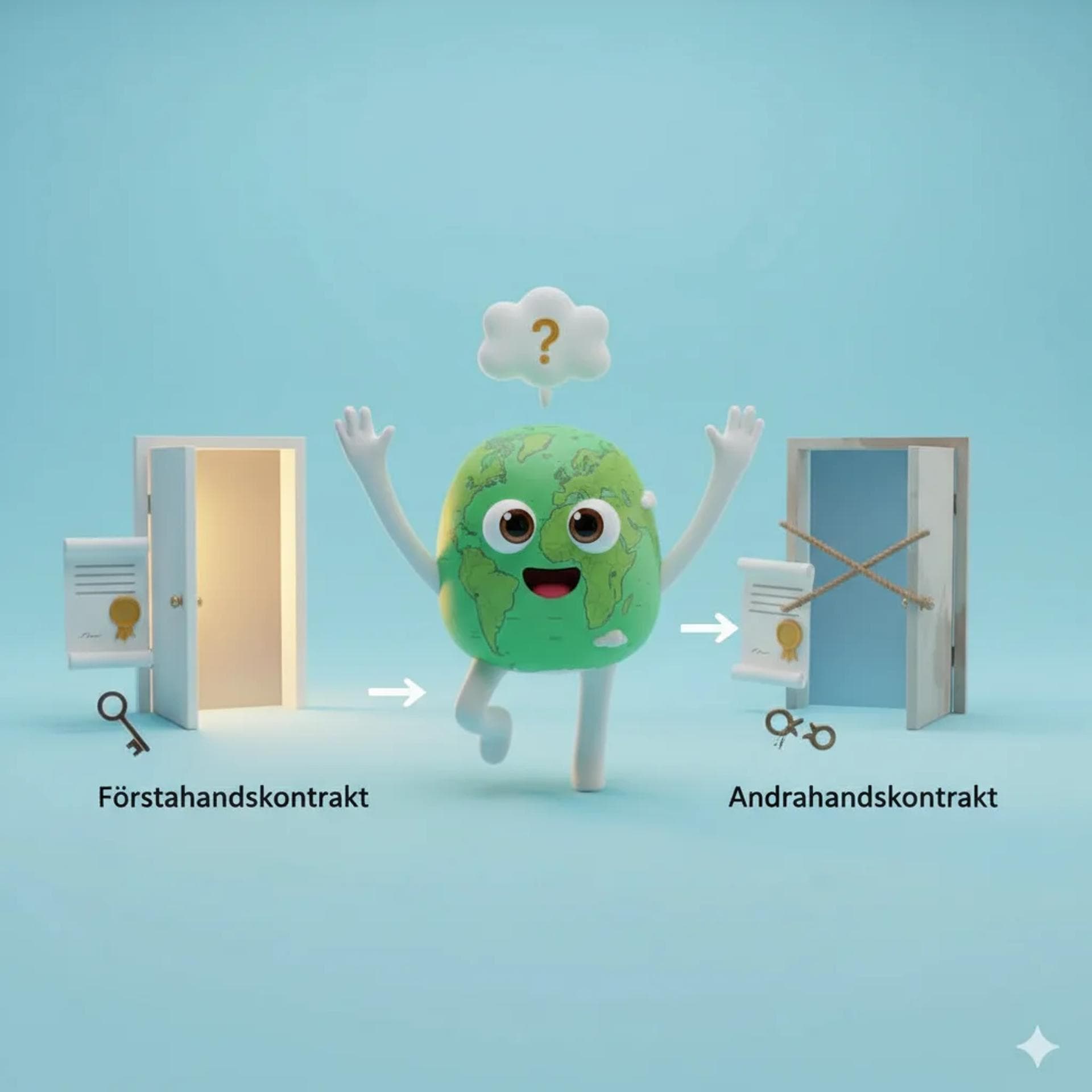
Finding accommodation in Sweden, especially in the major cities, can be a challenge. You'll often come across the terms förstahandskontrakt (first-hand lease) and andrahandskontrakt (second-hand lease), but what do they actually mean, and what rights and obligations come with them? This article clarifies the differences between these two types of contracts, focusing on the benefits and protections of a first-hand lease in Sweden. We will go through everything from security of tenure (besittningsskydd) to rent negotiations and what you as a tenant should consider. At Bofrid, we want to make your housing search in Sweden as easy and transparent as possible. Read on to get a clear picture of what a first-hand lease entails and how it differs from a second-hand lease. This knowledge is crucial for making an informed choice and protecting your rights as a tenant in Sweden.
What is a First-Hand Lease and How Does it Work in Sweden?
A first-hand lease, also called a direct lease, means that you rent a property directly from the property owner or landlord. This is the most sought-after form of rental agreement in Sweden because it gives you as a tenant strong protection and long-term security. To get a first-hand lease in Sweden, you usually need to register on a housing queue (bostadskö) or meet specific requirements set by the property owner, such as income requirements or references.
Rights and Obligations with a First-Hand Lease in Sweden
With a first-hand lease in Sweden, you have a number of rights, but also obligations. One of the most important rights is besittningsskyddet (security of tenure), which means that you have the right to remain in the apartment as long as you fulfill your commitments, such as paying the rent on time and not disturbing the neighbors. Your obligations include taking care of the apartment, following the house rules, and informing the landlord of any damage or problems.
Rent Negotiation and Rent Setting in Sweden
The rent for a first-hand apartment in Sweden is usually negotiated between the landlord and the Tenants' Association (Hyresgästföreningen). This ensures that the rent is reasonable and does not exceed the market rent. The landlord can raise the rent, but must follow specific rules and notify you in good time. You have the right to contest a rent increase if you consider it unreasonable.
Termination of a First-Hand Lease in Sweden
Both you as a tenant and the landlord can terminate a first-hand lease in Sweden. The notice period varies depending on the agreement, but is usually three months for the tenant. The landlord has more limited opportunities to terminate the agreement and must have a valid reason, such as extensive renovations or that the property will be used for other purposes. The security of tenure (besittningsskydd) gives you as a tenant strong protection against unjustified terminations.
What is a Second-Hand Lease and How Does it Differ from a First-Hand Lease in Sweden?
A second-hand lease means that you rent a property from someone who already has a first-hand lease. This can be an apartment, a room, or a house. Second-hand leases are often shorter and more flexible than first-hand leases in Sweden, but also give you less protection as a tenant.
Rights and Obligations with a Second-Hand Lease in Sweden
As a second-hand tenant in Sweden, you have certain rights, but they are not as extensive as with a first-hand lease. You have the right to a habitable dwelling and that the rent is reasonable in relation to the apartment's standard and location. Your obligations include paying the rent on time and taking care of the property. It is important to remember that your rights depend on the first-hand tenant's agreement with the property owner.
Security of Tenure with a Second-Hand Lease in Sweden
The security of tenure (besittningsskydd) is significantly weaker with second-hand leases in Sweden. You have basically no security of tenure if you rent an apartment in the second hand. This means that the first-hand tenant can terminate the agreement with short notice, usually one to three months, without having to state any specific reason. However, there are exceptions, for example if you have lived in the apartment for more than two years, then you may be entitled to some security of tenure.
Termination of a Second-Hand Lease in Sweden
The notice period for a second-hand lease is regulated in the agreement. Unless otherwise agreed, one month's notice applies to the tenant and three months to the landlord (first-hand tenant). It is important to have a written agreement that clearly specifies the notice period and other conditions.
Why is a First-Hand Lease More Desirable in Sweden?
A first-hand lease is generally more desirable than a second-hand lease in Sweden due to the security and rights it gives the tenant. With a first-hand lease, you have stronger security of tenure, which means that you have the right to remain in the apartment as long as you follow the lease agreement. In addition, you have greater influence over rent negotiations and can be involved in influencing the standard of the property.
Long-Term Security and Stability in Sweden
For many, the long-term security and stability is the biggest advantage of a first-hand lease in Sweden. You do not have to worry about suddenly being terminated and forced to move. This gives you the opportunity to create a home and settle down in the area.
Greater Influence Over Housing in Sweden
As a first-hand tenant in Sweden, you have a greater opportunity to influence your housing. For example, you can be involved in influencing renovations and maintenance in the property. You also have the right to participate in the tenants' association's work and influence rent negotiations.
Economic Benefits in the Long Term in Sweden
Although it may take time to get a first-hand lease in Sweden, it can be economically advantageous in the long term. The rent for a first-hand apartment is usually lower than for a corresponding second-hand apartment, especially in popular areas. In addition, you do not have to worry about sudden rent increases that may occur with second-hand leases.
How Do You Get a First-Hand Lease in Sweden?
Getting a first-hand lease in Sweden can be a challenge, especially in the major cities. It often requires patience and commitment, but there are several strategies you can use to increase your chances.
Register on Housing Queues in Sweden
The most common way to get a first-hand lease in Sweden is to register on housing queues (bostadsköer). Many municipalities and private property owners have their own housing queues. The longer you are in the queue, the greater the chance of getting an apartment. It is important to be active and regularly log in to the queue pages to update your profile and search for vacant apartments.
Network and Be Active in Sweden
Networking and being active can also increase your chances of finding a first-hand lease in Sweden. Talk to friends, acquaintances, and colleagues about your apartment search. Sometimes you can get tips on vacant apartments that are not advertised publicly. Get involved in local associations and networks, where you can meet people who can help you in your housing search.
Be Prepared to Compromise in Sweden
In the beginning, it can be difficult to get an apartment in your dream area or with all the amenities you want. Be prepared to compromise on location, size, or standard to increase your chances of getting a first-hand lease in Sweden. You can always change apartments later when you have settled in and gained more queue time.
What Should You Consider Before Signing a First-Hand Lease in Sweden?
Before signing a first-hand lease in Sweden, it is important that you carefully review the agreement and understand your rights and obligations. Here are some things you should consider:
Read the Contract Carefully in Sweden
Read the entire contract carefully and make sure you understand all the terms. Pay particular attention to the rent amount, notice period, house rules, and any special provisions.
Check the Condition of the Apartment in Sweden
Before you move in, you should carefully check the condition of the apartment and document any damage or defects. This can be important if disputes arise later. Feel free to take pictures or videos as evidence.
Understand Your Rights and Obligations in Sweden
Make sure you understand your rights and obligations as a tenant in Sweden. You have the right to a habitable apartment and that the rent is reasonable. You are obliged to take care of the apartment and follow the house rules. If you are unsure about anything, contact the Tenants' Association (Hyresgästföreningen) for advice.
Common Questions
What happens if the landlord does not maintain the property in Sweden?
If the landlord does not maintain the property in Sweden, you have the right to demand that they remedy the defects. You can contact the Tenants' Association (Hyresgästföreningen) to get help with making a claim. In some cases, you may be entitled to a rent reduction if the defects are serious and affect your living environment.
Can I exchange my first-hand apartment in Sweden?
Yes, you have the right to exchange your first-hand apartment for another apartment in Sweden if you have considerable reasons, such as changed family circumstances or workplace. You need to apply for permission from the landlord or the Rent Tribunal (hyresnämnden).
What do I do if I disagree with the landlord in Sweden?
If you disagree with the landlord in Sweden, you can contact the Tenants' Association (Hyresgästföreningen) for advice and help with resolving the dispute. In some cases, the matter may need to be tried in the Rent Tribunal (hyresnämnden).
How do renovations affect my rent in Sweden?
The landlord has the right to raise the rent after renovations in Sweden, but the increase must be reasonable and based on the actual costs. You have the right to contest a rent increase if you consider it unreasonable. The Tenants' Association (Hyresgästföreningen) can help you assess whether the rent increase is reasonable.
We hope that this article has given you a clearer picture of the differences between first-hand and second-hand leases in Sweden and what you should consider when looking for accommodation. At Bofrid you will find both second-hand apartments and information that can help you in your search for a first-hand lease. Good luck!